 Pouya Edits
EN
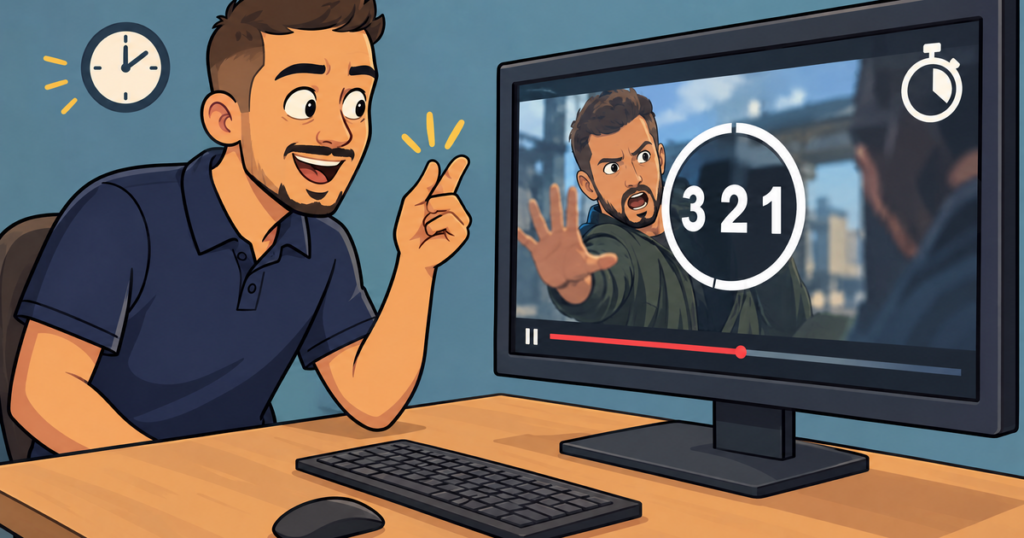
Restructuring the first 3 seconds is the highest-leverage edit you can make. If the opening frame does not create an open loop, the viewer swipes before the payoff.
Lead with the result or the tension, then earn it.
That is the whole idea in two sentences. The rest of this is how to actually build one, because “make a better hook” is not instruction, it is a complaint.
What a hook is doing
A hook has one job: make the next second necessary. It is not there to explain the video, introduce you, or set expectations. Every frame spent on those is a frame not spent on the only question the viewer is asking, which is whether to keep watching.
Practically, that means the opening has to raise a question the clip will answer, and it has to raise it before the viewer’s thumb makes a decision. On most platforms that decision window is under two seconds.
The three parts
1. A visual that is already moving
Frame one should not be a static shot of a person about to speak. Something should be in motion, mid-gesture, mid-reaction, mid-event. Motion reads as “something is happening here” before any words are processed.
The cheapest version of this: cut two frames later than feels natural. Almost every clip has a beat of dead air at the top that the editor stops noticing.
2. A line that creates a gap
The first words need to imply information the viewer does not have. Three reliable shapes:
- The outcome first. “This cost me four thousand dollars.” The question “how?” is automatic.
- The contradiction. “Everyone tells you to do this. It is why your channel is stuck.”
- The mid-scene entry. Dropping in at the moment of tension, so the viewer has to stay to work out what they walked into.
What they have in common is an unresolved gap. What fails is anything complete in itself — a greeting, a topic announcement, a “today I want to talk about”. Those close the loop before it opens.
3. Proof the answer is coming
A gap with no visible promise of resolution reads as clickbait, and viewers have been trained to leave. Something in the first three seconds should signal that the payoff exists and is close: the object on screen, the position on the board, the before-shot, the number in the caption.
This is the part most people skip, and it is why some technically correct hooks still bleed viewers at four seconds.
The failure modes
In rough order of how often I see them:
- Throat-clearing. “So basically”, “I wanted to show you”, “quick one today”. Cut every one of them, every time.
- Chronological loyalty. Starting where the moment started in the source video instead of where it gets interesting.
- Front-loaded context. Explaining who someone is before showing why anyone should care. Put it in the caption, or after the payoff.
- A hook that is not about this clip. Generic curiosity bait attached to a specific video. The bounce comes at second five instead of second two, which is worse: the algorithm reads it as a promise you broke.
- Text that arrives late. If the on-screen line fades in over half a second, it was not there when the decision was made.
How to actually write them
Write three hooks per clip before you open the timeline. Not one. Three is enough to get past the first obvious phrasing, which is usually a description of the clip rather than a hook for it.
Then cut the clip with all three and watch the openings back to back. The right one is normally obvious in the comparison and invisible in isolation — which is exactly why writing one and shipping it does not work.
If you can remove the first three seconds and the clip still makes sense, they were not a hook. They were a run-up.
Where to see it working
To see this applied to real footage, read the chess channel that compounded to 8.5M views, where the fix was leading with the reaction instead of the position. To pick which moments deserve a hook in the first place, see how to choose clips for Shorts, where different kinds of moments from the same upload reach different audiences.
If you would rather see it done on your footage before committing to anything, a single Short is the cheapest way to find out whether it moves your numbers.
Want results like this from your own long-form content?
Book a callMore from the Blog
Most creators pick their Shorts by scrubbing the timeline until something feels good. That is why the clips end up competing with each other instead of covering different ground. Selection is a separate job from editing, and it is the one that decides how far a clip travels. Here is the pass I run on […]
A branded reel for A Star Barbers (around 1.3M followers on Instagram), Dubai to London for a Nike-backed event, cut to his team's voice-over. His first real post after a year of quiet, at around 45K views.
4 reels and 3 stories for a UAE luxury menswear store, planned off five reels that already worked, shot and edited in about four hours, and delivered editable in the client's own Premiere project.