 Pouya Edits
EN
Eric Rosen: 8.5M views in five months from one chess channel

A breakdown of the hook restructuring that took Eric Rosen clips from flat to viral. The core change was not more editing — it was moving the strongest moment of each clip to the first three seconds.
Across roughly five months of repurposing, the channel’s Shorts and Reels compounded into 8.5M views.
What follows is what actually changed, because the interesting part is how little of it was craft.
Why chess is a hard case
Chess content has a structural problem in short form: the good moment depends on understanding the position, and understanding the position takes time you do not have. A brilliant queen sacrifice is meaningless to a viewer who has been looking at the board for two seconds.
The obvious response is to explain the position first. That is also the thing that kills the clip — you have spent your entire attention budget on setup, and the viewer swipes before the sacrifice lands.
So the clips were doing the honest thing and losing anyway. That is the situation the restructuring had to solve.
What changed
Lead with the reaction, not the position
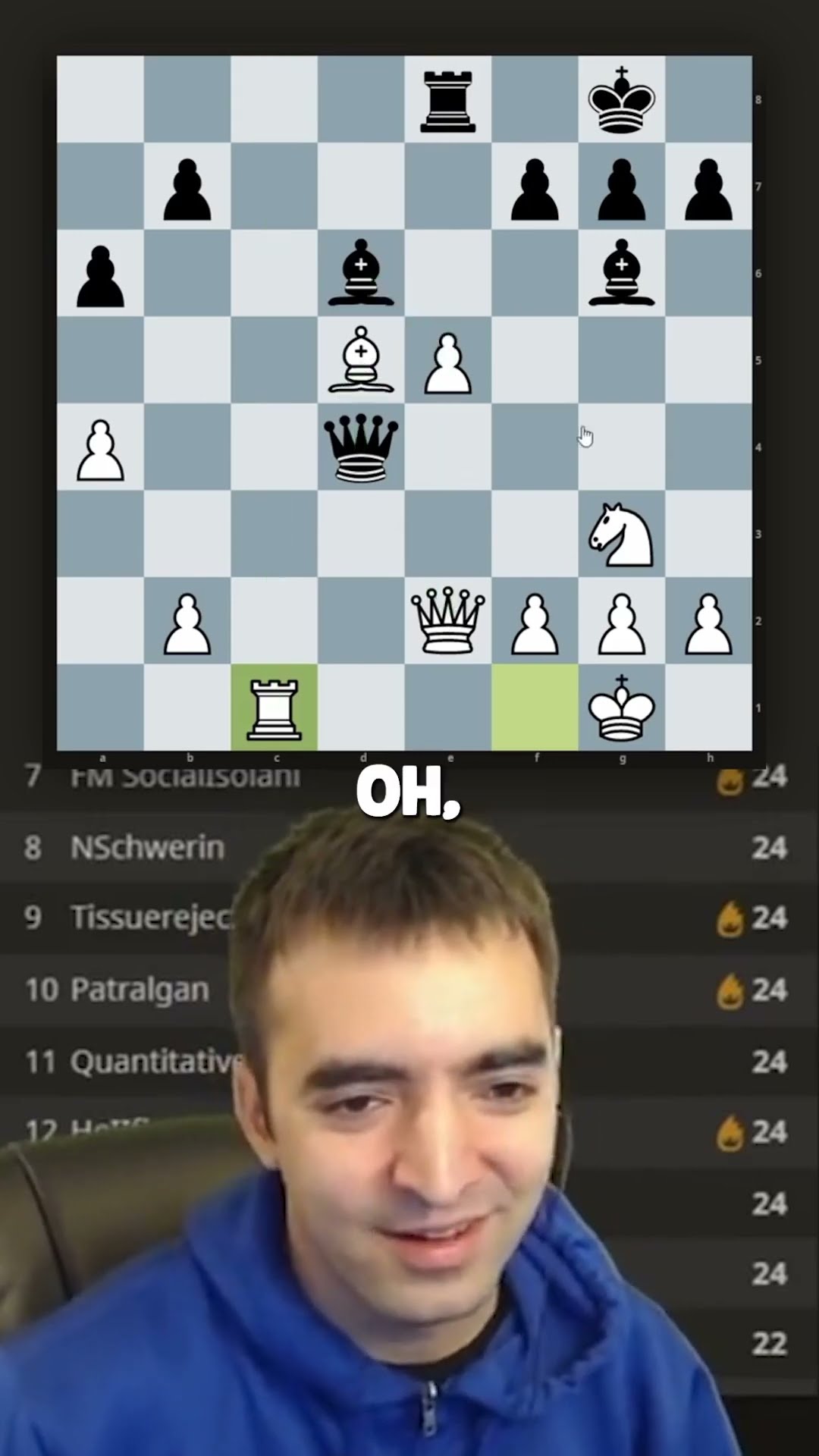
The strongest three seconds in a chess clip is usually not the move. It is the human response to the move — the pause, the laugh, the “wait, what?”. That is legible to someone who has never played a game in their life, because it is a person reacting, not a board.
So the clips were re-cut to open on the reaction and then rewind into the position. The viewer arrives already knowing something remarkable happened, which buys the five seconds of explanation that used to sit at the front and cost everything.
Let the caption carry the setup
Anything that had to be understood but was boring to say out loud went into the on-screen text instead of the audio. Whose game it is, what the rating is, what is about to happen — that is one line of text the viewer reads in half a second while the clip is already moving.
Spoken setup is expensive. Written setup is nearly free. Most of the pacing gain came from that trade, not from tighter cuts.
Cut to one idea
Clips that tried to show a game got replaced by clips that showed a moment. One position, one turn, one payoff. If a second good thing happened later in the same game, it became a second Short rather than a longer first one.
That change alone roughly doubled the number of clips a single stream session produced, which matters more than it sounds — see below.
Cadence did as much work as craft
The 8.5M did not come from a few breakout clips carrying the rest. It came from posting consistently for five months while the hit rate slowly improved.
Short-form is a volume game with a quality floor. You need enough attempts for the algorithm to find the ones that work, and you need each attempt to be good enough that it is worth finding. A channel posting twice a month with perfect edits and a channel posting daily with sloppy ones both underperform, for opposite reasons.
Consistency is not a moral virtue here. It is sample size.
What transfers to any niche
Chess is unusual, but the three moves are not:
- Find the moment a stranger can read. In chess it is the reaction. In a podcast it is the interruption. In a tutorial it is the result. It is rarely the part you think is most interesting, because you understand the context and they do not.
- Move it to the front. Chronology is a habit, not a requirement. Starting at the payoff and rewinding is allowed, and is usually better.
- Push setup into text. Whatever the viewer must know but does not want to hear, write it on screen.
The numbers
Roughly five months of repurposing, 100+ clips, 8.5M views across Shorts and Reels, on a channel of 700K+ subscribers. No additional filming: every clip came out of long-form videos that had already been published.
Hey! The clips look good to post. I went ahead and retitled them.
Eric Rosen
Eric Rosen is one of nine chess channels I have done this on. The pattern across all of them, and where they differ, is in chess content repurposing.
This is one of nine chess channels I have edited. If you want the restructuring done on your own footage rather than described, that is the monthly Shorts-only package.
Want results like this from your own long-form content?
Book a callMore from the Blog
A branded reel for A Star Barbers (around 1.3M followers on Instagram), Dubai to London for a Nike-backed event, cut to his team's voice-over. His first real post after a year of quiet, at around 45K views.
4 reels and 3 stories for a UAE luxury menswear store, planned off five reels that already worked, shot and edited in about four hours, and delivered editable in the client's own Premiere project.
Six family travel vlogs from one trip, usually back in 24 hours and never more than 48, while the client stayed on holiday. The Lebanon episodes averaged 1.9x his previous six.