
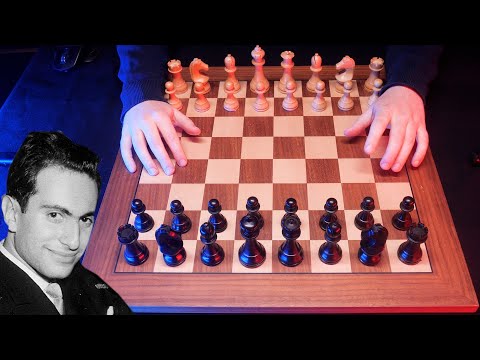
ASMR Chess: 20+ videos where the brief was do not be noticed

ASMR Chess was not a creative brief. It was a production role.
For two months I worked inside their pipeline as the editor on 20+ long-form YouTube videos. Tasks came through ClickUp, deadlines were fixed, and the standard was not “make this interesting” but “make this flawless”.
That is a genuinely different job from the repurposing work that makes up most of my portfolio, and it is worth writing up precisely because the skill it tests is the unglamorous one.
When the brief is cleanliness
Most editing conversations are about impact. Hooks, pacing, retention, what to cut. This channel had already solved all of that. The format worked, the voice worked, the audience was there. What they needed was execution that never introduced a problem.
On a channel like this the audience notices errors in a way they do not elsewhere. The whole appeal is calm and precision. A jarring cut, a frame of the wrong audio, a caption that sits a beat late, and the mood the entire video depends on is gone. You cannot rescue that in the next scene, because the next scene has the same job.
So the quality bar was defined negatively. Success was the absence of anything the viewer could catch on.
What that actually requires
Consistency across twenty videos, not brilliance in one
Twenty videos over two months means the twelfth video has to look like it was made by the same person as the second. Every caption style, every transition length, every audio level has to be the same decision made the same way, twenty times.
That sounds like a template problem, and partly it is. But templates only cover the cases you anticipated. The consistency that matters is in the judgement calls the template does not reach, and holding those steady across two months is a discipline rather than a technique.
Working the client’s system, not my own
ClickUp was the source of truth. Not a chat thread, not my own notes, not a shared drive folder I organised the way I like. Every task had a state, and the state had to be accurate because other people were reading it to plan their own work.
Editors are often quietly bad at this. The craft attracts people who prefer to disappear into the timeline and surface with something finished. On a team that behaviour reads as a black box, and a black box is a risk even when the output is good.
Delivering on time as a feature
Fixed deadlines on a publishing schedule are not a preference, they are a dependency. A late video does not just arrive late, it moves everything behind it and burns someone else’s buffer.
I treated the deadline as part of the deliverable spec, the same as resolution or aspect ratio. It is the least interesting thing on this page and the one that most determines whether an editor gets kept.
Result
20+ long-form videos across two months, delivered inside the client’s own project management system, on a standard where the goal was that nobody would notice the editing at all.
Thanks, this is exactly what we need. Simple and mistakeless.
ASMR Chess
That quote is the review I am proudest of, because it is the hardest one to earn twenty times in a row.
More on the chess work in chess content repurposing. If you have a format that already works and need an editor who will not break it, book a call, or send one video through as a single long-form edit first.
Want results like this from your own long-form content?
Book a callMore from the Blog
Editing short-form for a three-creator show with four-plus synced angles, won from a 48-hour sample edit and worth around 2.5M views in a month.
Three years of cutting a weekly chess podcast into Shorts. 500+ clips, 3M+ views, and the selection system that made the workload predictable.
Six months of long-form family vlog editing on 24-hour turnarounds, averaging around 500K views, about 150K per video above the channel other editing.