
Al Mandoos Jewellery: one comedy clip, written, shot and cut in the shop
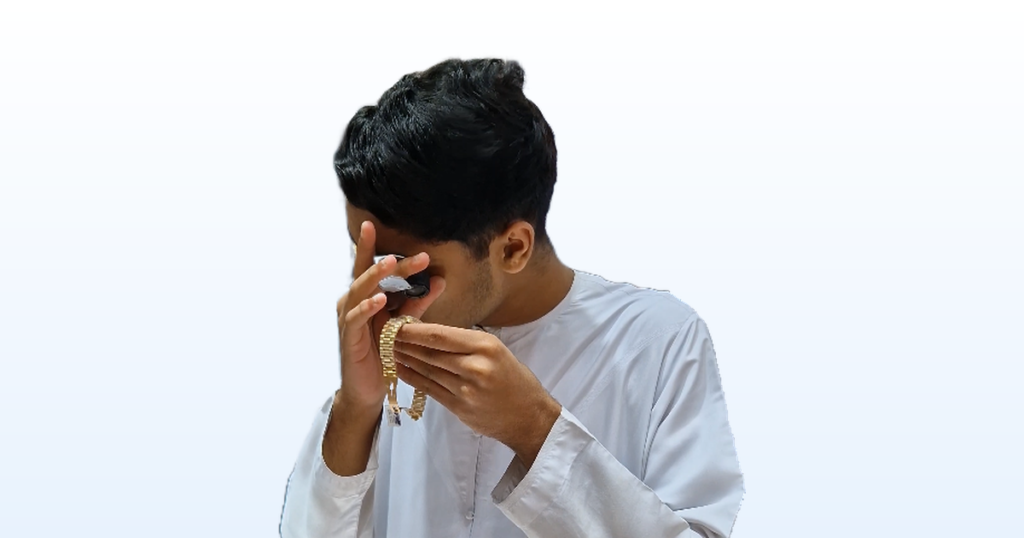
Al Mandoos is a jewellery shop in the Deira Gold Souk. I made them one thing: a short comedy clip. I wrote it, directed the actor, shot it on a phone, and cut it in the shop before I left.
One deliverable is not much of a case study on its own. What is worth writing down is that every part of it happened in the same room on the same afternoon.
Comedy is written before the camera is on
You cannot edit a laugh into footage that does not contain one. Pacing helps and cutting on the right frame helps, but if the joke was not built into what was said and done, there is nothing in the file to find later.
So the writing came first, and it was written against what the day could actually produce.
One actor, one location, one visit
We brought in an actor, and he is the only element on that shoot I had any control over. The shop was a working shop, the light was the light, and the customers were real customers. Everything except the performance was found, not arranged.
That decides what the script can be. A joke that needs a second location, a crowd doing something on cue, or a reaction from someone who has not agreed to be in a video is a joke you cannot shoot. A joke carried by one performer, a face, and two or three lines is one you can shoot fifteen times until it lands.
So the writing kept loading everything onto the actor, because he was the only part of the room that would do the same thing twice.
The joke cannot be at the product’s expense
A gold shop sells trust. Someone is spending real money on a thing they intend to keep, or give at a wedding, and comedy that makes the gold look cheap or the shop look unserious about it costs more than a clip is worth.
So the joke sits on the situation instead. The browsing, the inspecting, the patter, the parts of a souk visit that anyone who has walked through Deira recognises immediately. The product stays straight and the person handling it carries the humour.
A gold souk shop is a difficult room to shoot
Everything in it reflects
Glass cases, mirrors on the walls, and a room full of polished metal. Nearly every surface returns the light, and most of them return the camera and the person holding it.
The shop’s own lighting makes this worse before it makes it better. It is aimed at making gold sparkle in a display case, not at making a face readable at conversational distance, so the bright spots land in the wrong places for a talking shot. A good share of the work was choosing where to stand.
The shop does not close for you
Souk shops trade all day and this one kept trading. You are working in a narrow space around real customers who did not agree to appear in anything.
A phone is a genuine advantage there rather than a compromise. Nobody in a busy souk changes their behaviour around a phone. A rig, a light stand and a tripod would have bought marginally better images and cost the thing the clip actually needed, which was a shop that carried on being a shop while we worked in it.
Cutting it on the spot is not really about speed
On-location editing gets sold as a turnaround feature, and it does deliver faster. That is not the reason to do it.
The reason is that a missing shot costs a minute while you are still standing in the shop, and costs a second visit once you have gone home. Editing on location turns the edit into the thing that checks the shoot, at the only point where the shoot can still be fixed. A gap you can see in a timeline is a gap you can still walk across the room and fill, with the actor still in costume and the shop still open.
The client can also watch it in the room, which is a shorter conversation than any number of emailed revisions.
Result
One comedy clip, written, directed, shot and edited inside a single visit, and finished before I left the shop.

Al Mandoos posted it to their own Instagram, which is the version their customers actually see.
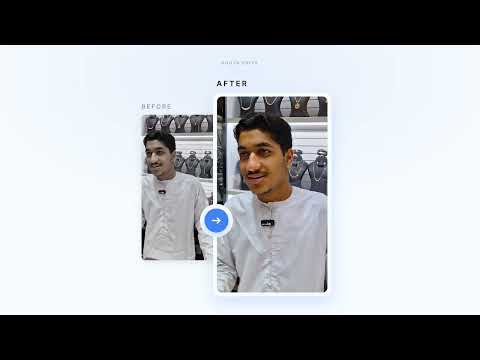
Here is the same footage before and after the edit, which is the clearest way to show what the cut is actually doing:
Kit
A phone, and nothing else. No lights, no gimbal, no second operator, and the edit cut on location.
I also shoot and cut fitness content in one pass, which is the same one-person job in a room with a different set of problems. This shoot was in a Dubai shop, and most of the in-person work is: the video editor in Dubai page covers how the local jobs run. If you need someone who can write it, direct it, shoot it and cut it before leaving, book a call. If the footage already exists, one finished clip is a single short.
Want results like this from your own long-form content?
Book a callMore from the Blog
Four unsolicited sample clips across four unrelated niches, none of which turned into contracts, and an honest account of what spec work actually proves.
Two months embedded as the editor on a channel whose format already worked, where success was defined as the absence of anything the viewer could catch on.
Editing short-form for a three-creator show with four-plus synced angles, won from a 48-hour sample edit and worth around 2.5M views in a month.